Guide's Advice
It just so happened that our three guides – Jim, Tom & Brad, were here a few days back and Barry asked them a couple of questions about their most valuable gear. What do they never leave home without when guiding. Here are their answers:
Conservationist of the Year
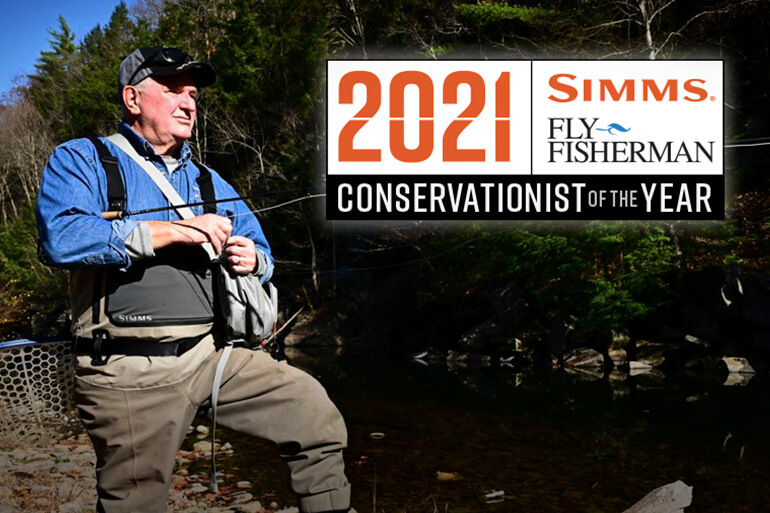 We are very pleased and excited to announce that friend and Commissioner at Large for the Pennsylvania Fish & Boat Commission, Charles Charlesworth, has been chosen at 2021 Conservationist of the Year. It would be hard to find another person (although we know they are out there) who has been more committed or has worked harder than Charlie in protecting, preserving, rehabilitating streams and promoting fly fishing. Take a look at what he has done for the Lackawanna River. Pretty impressive. Congratulations Charlie!
https://www.flyfisherman.com/editorial/2021-conservationist-of-the-year/387254
Photographing Fish
We have drives full of stories that we have written for various publications over the years. Actually some are still stored in boxes of floppy disks, cds and DVDs, and some are so old we don't have the devices to access them. But, that's a problem for another day. As you know, the flies and some of the terminal tackle changes over the years, leaders get thinner and stronger, fly patterns come and go, as do gadgets. But the thing that doesn't change is the quarry – the fish. Over the next few months we will be republishing a few of the short stories from days gone by. Here's our first one Photographing Fish originally in Field & Stream, 2010. Photos in the album are a mix of good, funny and unplanned.
We handle fish almost on a daily basis as either guide, trip host, or fishing photographer. So, when our friend and editor Doug Olander asked for a few suggestions on releasing fish after we take a photo we thought we might begin with talking about handling the fish.
There are some toothy critters out there and when we decide to photograph these, there are some things to think about. A big barracuda is the first fish that comes to mind. Sharks can be a dangerous handful and even a small jack crevalle can give a nasty wound if handled improperly. Heck, we can get a sore hand for a couple of days by getting poked with the dorsal fin of a harmless panfish! These potentially hazardous situations can be the result of getting our hands too close to a mouthful of teeth (as in barracuda), or coming in contact with a sharp spine or gill plate (jack or snook), or an actual intended bite (shark). Cathy once grabbed a decaying sockeye salmon for a photo in Alaska and managed to get her fingers inside its mouth. It took a month of antibiotics to finally rid her hands of infection caused by bacteria in the rotting process. Be careful where you put your hands. Often on big fish a boca grip is the safest way to handle them for a photograph.
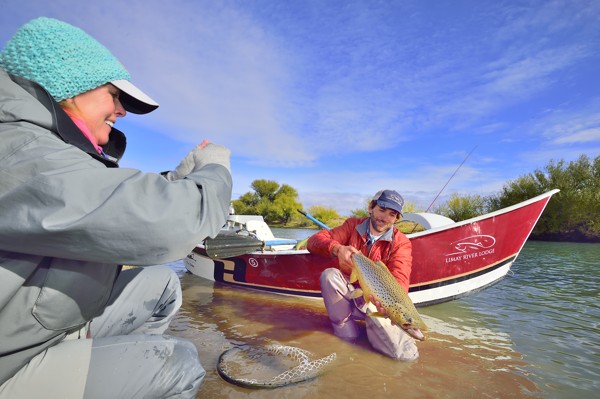 After catching the fish, how we handle it for the photographs is critical to its survival after being released. Nothing is set in cement here as there are so many variables, but there are a couple things to keep in mind. If the fish is taxed from being played too long it will take longer to revive and even then he may not survive. If he has put up a hard fight and is obviously played out, we’ll often help revive and release him using the method described below without chancing a photograph. We don’t believe any photograph is worth killing the fish.
This is the system we use whenever we photograph fish. The longer we hold a fish out of the water the better the odds are of it not surviving the event. If the fish is in good shape one of us will compose the photo while the other is safely holding the fish under water either gently cradling it or using a net. The person in charge of the fish can be getting it into the correct position for the photograph before lifting it when the photographer gives the word. If the head of the fish is gently cradled in one hand while gripping just ahead of the tail with the other hand, you’ll see plenty of the fish in the photograph and have a comfortable hold on the fish. For big, slippery fish a fishing glove or even a sun glove will help grip the tail. Make sure the glove is wet to protect the fish.
We work with Nikon digital cameras so we take our first picture of the angler holding the fish underwater and then check our composition and light in the monitor of the camera. If we like it we do a one-two-three count, the fish is lifted out of the water, the angler smiles, and the photographer fires three quick shots and the fish goes back underwater.
If the images look good in the monitor, it’s time to release the fish. We’re still holding the fish with a firm grip just ahead of the tail keeping it in an upright position in the water. If it’s not anxious to go we slowly move it back and forth facing into the current making the gills work. Make sure the fish is in clean water where turtle grass, sand, or mud can't foul the gills. If it’s exhausted or bleeding there may be predator fish in the area waiting for a chance to get at him. If it starts to turn sideways or upside down it’s in trouble, rescue it and repeat the revival process. It may take some patience when you want to get back to fishing but if it’s a fish worthy of a picture, it's always worth ensuring it’s survival.