10 Tips on Fishing Nymphs 
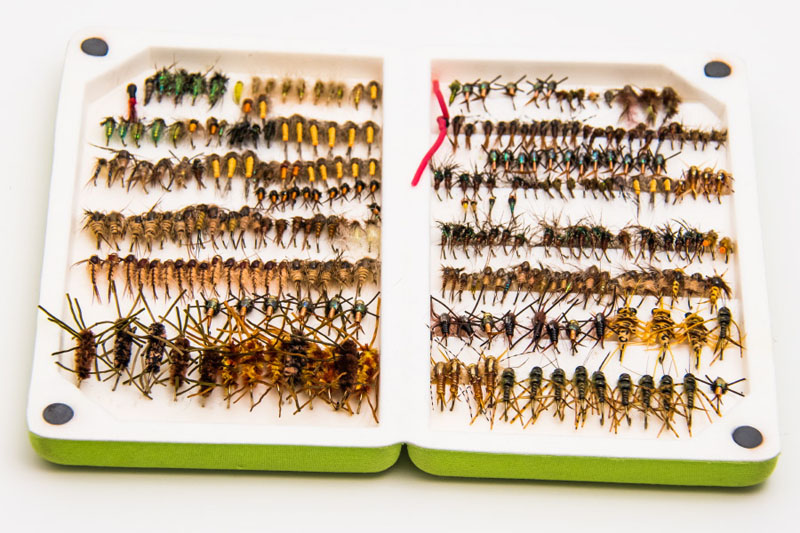
1. Make sure your fly (flies) are getting down to where the fish are. If it's spring time and the water is high and cold, you may have to add split shot. If you're not picking up leaves and dirt on the bottom, you're not on the bottom.
2. Fish two nymphs. The first fly you tie on should be the heavier and bigger of the two. Start with something like a size 12 bead head hare's ear and with a cinch knot attach a 14” section of tippet onto the back of the hook. To the other end attach a size 14 or 16 caddis pupa, scud, or smaller nymph, this is your dropper. Refer back to #1.
3. Use a strike indicator or a RIO indictor line. Think about the position of the strike indicator and the approximate depth of the water. The indicator controls how deep the flies will be. If the indicator is too far up the leader you'll miss the strike and you will be hung up a lot. If it's too far down the leader it will hold the flies off the bottom. Experiment with different indicator positions.
4. Experiment with different kinds of strike indicators. Whether you decide on yarn, Styrofoam, balloons or plastic, each will ride a little differently on the water. The plastic balloon type will float better with heavier nymphs. If the water is clear a smaller lighter yarn indicator is best. You don't want to spook or alert the fish when it lands on the water.
5. Check your flies often and slow down your cast. With two flies, a strike indicator, and split shot on your leader your chances of getting a tangle will increase. Check also to make sure the bottom fly does not tangle on the dropper line.
6. If you find a wind knot in your leader, get rid of it.
7. False cast as little as possible. If you keep your flies wet they will sink faster and the more you cast the easier it is to get a tangle.
8. Experiment with different fly patterns, sizes, split shot, and indicator placement until you find the right combination for the right water on the day you're fishing.
9. Be aware of what is going on around you. Learn your hatches. If it is time for March Browns to hatch, a March Brown nymph is a good choice.
10. There are exceptions to every rule – be flexible.
Here's a link to our store where we've got lots of great flies to help you fill your fly box.
And speaking of nymphs, here's a link to the latest segment of RIO's How-To series, How to Fish a Nymph and Indicator.
Requirements of a Stream Trout
We found an interesting excerpt from Jim McLennan's book on what is needed for a healthy trout stream. Food for thought as we anticipate spring and trout season. While the book is based on streams in Alberta, Canada, the requirements for a healthy trout stream are the same everywhere. We hope you enjoy it. Click here to read the article