This week we have suggestions from Barry on getting our gear ready for spring and trout season. Let us know if you have any questions. You can access our comments section by viewing the blog online (see the option at the very top of the blog). We love hearing from our readers!!
Down Time
These are the months when we usually have time to check our gear to make sure we're ready for our next fishing trip. Let's look at some of the things we can do before spring rolls around.
If you use cleats, check your boots to see if any cleats are worn down or missing. If you're missing cleats, it's easy to replace them and now is the time to do it. Replace 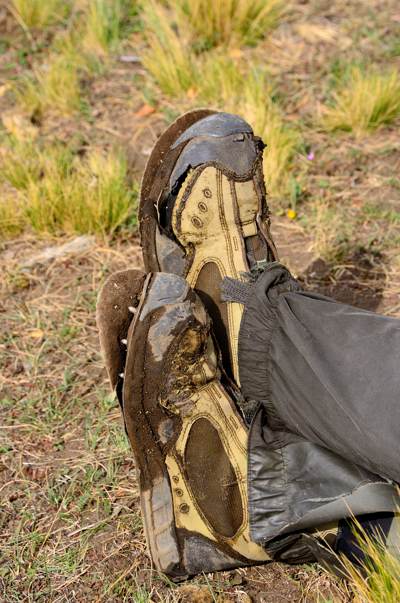 worn laces and examine the eyelets which can develop a sharp edge that will wear on the laces. Make sure the boot bottoms are not coming loose from the uppers. There are only so many repairs you can make, so it may be time for new boots. Your local or online fly shop should have new inventory coming in and will appreciate the order.
Everyone knows that leaky waders are no fun. On our last trip to Spain I had a leak that became more serious as the trip went on. I planned to patch the waders as soon as we got home but it slipped my mind and on the coldest day this fall I guided and was sorely reminded about the leak. If your waders are Goretex, you can easily find the leak by turning the waders inside out and spraying the inside with rubbing alcohol. The holes quickly show up as dark spots. A little drop of Aquaseal rubbed over the dark spot will solve the problem. For non-breathable materials turn the waders inside out and fill with water being careful not to get the outside wet. The water pressure will push a droplet of water through the wader where you can see it, mark the holes with a marker as they appear. The waders will be very heavy once filled with water so this process works best with two people and a hose. Once the material is dry cover the holes with aqua seal.
After a few seasons raincoats will start to seep or leak, especially around the shoulders, so it's good to periodically treat the fabric with ReviveX or Nikwax. Goretex molecules shrink over time and putting the raincoat in the clothes dryer for a half hour will expand the molecules. Follow the directions carefully for either product. Zippers can sometimes be a problem so a light coat of zipper lube will keep them running smoothly.
This is the perfect time to reorganize your fly boxes, restock favorite patterns and add new ones. We like compartment boxes for storage but prefer to fish out of boxes that keep our flies more organized, accessible and secure. A long time ago I opened a compartment box upside down on the stream and lost most of the contents. The icing on the cake was watching a trout rise to an escaped fly floating downstream.
Vests, hip packs, or whatever you use to carry your flies and accessories should be inventoried. Stock up on tapered leaders, replace near empty tippet spools and fly floatant, fly drying crystals, split shot, strike indicators, stripping fingers, lip balm, hook sharpener and other accessories. Don't forget to purchase a new fishing license.
Rod handles can be cleaned with a mild soap and warm water. We often use a Simple Green, from the hardware store, for deep down dirt. Reel seats should be clean of dirt and gri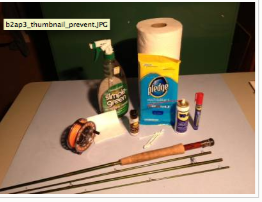 t. Grit in a screw lock reel seat can be a real problem. Stripping guides, snake guides, and tip tops should be checked for wear and replaced if necessary. If your rod has given you many years of service, carefully examine guides and tip tops. Sometimes a sharp edge or groove will develop which can ruin a fly line. Using Pledge wipes on your rod blank will make it look like new.
Reels should also be carefully inspected and cleaned. Watch for corrosion or grit build up around screws, and crevices. Turn back the drags and check the screws that hold the reel foot to the frame as this is a place that can collect sand or grit. If your tackle is used in salt water, this type of maintenance becomes more important than ever and will need to be done periodically throughout the season. Pledge wipes will also make your reels look new again.
Fly lines should be cleaned as necessary during the season but examined again before the start of a new season. Check out RIO's 2 part YouTube series How To Clean a Fly Line. https://www.youtube.com/watch?v=QsCDjSdrpOA and https://www.youtube.com/watch?v=taTfJMpiXeQ.
Examine your welded loops and nail knots both on the leader line connection as well as the fly line backing connection for any wear and replace if there is any doubt. Take a good look at your backing and make sure the wraps are on tight and even on the reel so there is no chance for a tangle or knot that will cause you to lose a good fish.
Even your landing net should be looked at. Holes in the net bag may let a fish escape so give it a look and repair if necessary.
Outside our office window it's snowing. A text came awhile ago from our guide, Tom Harris, who decided to go fishing. He tells us that he missed one fish early this morning but nothing since, says he's having trouble changing flies because of cold fingers. Here in the tackle room Eric Clapton is playing in the background, it's nice and warm, and the perfect day to check gear and maybe tie a few flies. We may fish tomorrow, if the weather forecast improves, but for now it's down time. -Barry